












A practical guide for U.S. families preparing to welcome a new kitten, covering home setup, essential supplies, arrival day, resident-pet introductions, veterinary planning, and pickup or delivery preparation.
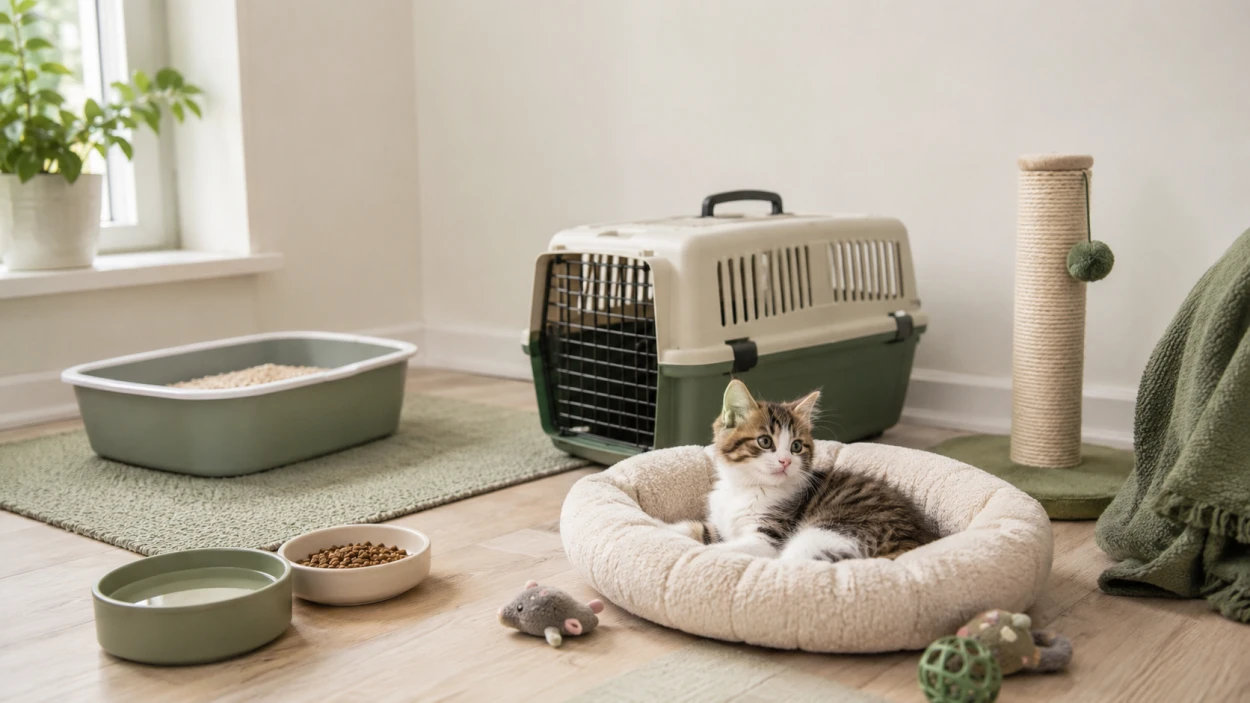 Bringing a kitten home is an exciting step, but the first few days are usually easier when the household is prepared before pickup or delivery. A quiet transition room, familiar supplies, a secure carrier, and a veterinary plan can help the kitten adjust gradually to its new surroundings.
Whether a family collects a kitten by appointment in Wood Dale, Illinois, or receives coordinated delivery elsewhere in the United States, the same basic preparation principles apply.
Create a Quiet Transition Room
A new kitten does not need immediate access to the entire home. Start with a quiet bedroom, office, or another secure room away from heavy household traffic.
The room should include:
- Fresh water
- Familiar kitten food
- Separate food and water bowls
- An accessible litter box
- A comfortable bed or blanket
- A scratching surface
- A few safe toys
- A secure hiding place
Remove exposed electrical cords, dangling strings, unsafe plants, small objects, unstable decorations, and access to open windows.
A smaller transition area helps the kitten locate food, water, litter, and resting spaces without becoming overwhelmed by the entire home.
Prepare the Supplies Before Arrival
Ask which food and litter the kitten currently uses. Keeping familiar supplies during the first few days makes it easier to observe normal eating and litter-box habits.
Useful supplies include:
- A secure, correctly sized carrier
- Familiar kitten food
- Food and water bowls
- A low-entry litter box
- Litter and a scoop
- Washable bedding
- Scratching posts or pads
- Safe toys
- Pet-safe cleaning supplies
Avoid changing the food, litter, and daily routine all at once unless a veterinarian recommends otherwise.
Keep Arrival Day Calm
Take the closed carrier directly into the prepared room. Close the door before opening the carrier and allow the kitten to exit voluntarily.
Some kittens explore immediately, while others remain inside the carrier or hide for a while. Avoid pulling the kitten out, passing it between several people, or arranging a large welcome gathering.
Children should sit quietly and allow the kitten to approach. Keep loud music, vacuuming, and unnecessary visitors to a minimum during the first day.
A predictable routine is usually more helpful than constant attention. Offer meals at consistent times, keep the litter box clean, and provide short periods of gentle play when the kitten appears interested.
Introduce Resident Pets Gradually
Do not introduce a new kitten directly to resident cats or dogs at the front door.
Begin with separation. Exchange bedding or other scent-carrying items before arranging controlled visual contact. Each cat should initially have separate food, water, litter, sleeping, and hiding areas.
For dogs, use a leash or secure barrier during early introductions and reward calm behavior. End the meeting before either animal becomes overwhelmed.
Move forward only when the animals appear comfortable. Do not rush the process according to a fixed timetable.
Plan Veterinary Care
Identify a veterinarian before the kitten arrives and ask when the first appointment should take place. Bring all available health, vaccination, medication, microchip, feeding, and travel records.
A veterinarian should review the individual kitten’s history and recommend an appropriate care plan.
Contact a veterinarian promptly if the kitten:
- Refuses food or water
- Has repeated vomiting or diarrhea
- Appears unusually weak
- Has difficulty breathing
- Strains to urinate
- Shows another sudden or concerning change
This article provides general educational information and does not replace veterinary diagnosis or treatment.
Keep the Litter Area Clean
Place the litter box away from food-preparation areas, children’s play areas, and the kitten’s food and water.
Clean the litter box regularly and wash your hands after handling litter or pet waste. Pregnant people and people with weakened immune systems should take additional precautions and consult a healthcare professional or veterinarian when needed.
Prepare for Pickup or Delivery
Families collecting a kitten in the Chicago area should confirm their Wood Dale appointment before traveling and bring a secure carrier for the journey home.
Families receiving coordinated delivery elsewhere in the United States should confirm:
- The handoff location
- The authorized recipient
- Transport contact information
- Identification requirements
- Which records accompany the kitten
- The food and litter currently being used
Families exploring current kitten-purchasing pathways can visit MeoWoff for information about appointment pickup in Wood Dale and coordinated delivery options for eligible destinations across the United States.
Availability, prices, documents, delivery costs, and travel timing can change, so all details shttps://meowoff.us/?utm_source=chatgpt.comhould be confirmed directly before making a reservation.
First-Week Checklist
Before Arrival
- Prepare the transition room
- Purchase familiar food and litter
- Confirm pickup or delivery details
- Organize the kitten’s records
- Identify a veterinarian and emergency clinic
Arrival Day
- Move the carrier directly into the quiet room
- Let the kitten exit voluntarily
- Limit visitors and noise
- Offer fresh water and familiar food
- Keep the litter box easy to locate
During the First Week
- Observe eating, drinking, and litter use
- Maintain a predictable routine
- Introduce resident pets gradually
- Attend the veterinary appointment
- Expand access to the home slowly
Final Thoughts
A successful first week depends on preparation, patience, and realistic expectations. Give the kitten a secure starting space, preserve familiar routines where practical, and allow introductions to progress gradually.