









If you've spent any time on Facebook lately, chances are a parrot has made you laugh out loud. Maybe it was the tiny Quaker Parrot who refused to "faint" on cue and shot back "Wait... noooo!" a beat too late. Maybe it was the African Grey ordering Alexa to play music — and then dancing harder than anyone in the room. Parrots have quietly become the internet's most reliable source of comedy gold, racking up millions of views with nothing more than a head tilt, a sassy comeback, or a dramatic flop onto a sofa cushion.
But here's the thing: parrots aren't funny by accident. Underneath every viral clip is a genuinely fascinating animal — one of the smartest, most social, and most misunderstood pets in the world. So let's talk about why parrots steal the show, what's actually going on in that feathery head of theirs, and what it means for the humans lucky enough to share a home with one.
The Class Clown of the Animal Kingdom
Parrots aren't just mimicking sounds for attention — they're running some of the most sophisticated cognition in the animal kingdom. Researchers have compared the problem-solving abilities of African Grey Parrots to those of a four- or five-year-old child. Some species can understand cause and effect, remember hundreds of words in context (not just repeat them), and even show basic arithmetic-like reasoning in lab settings.
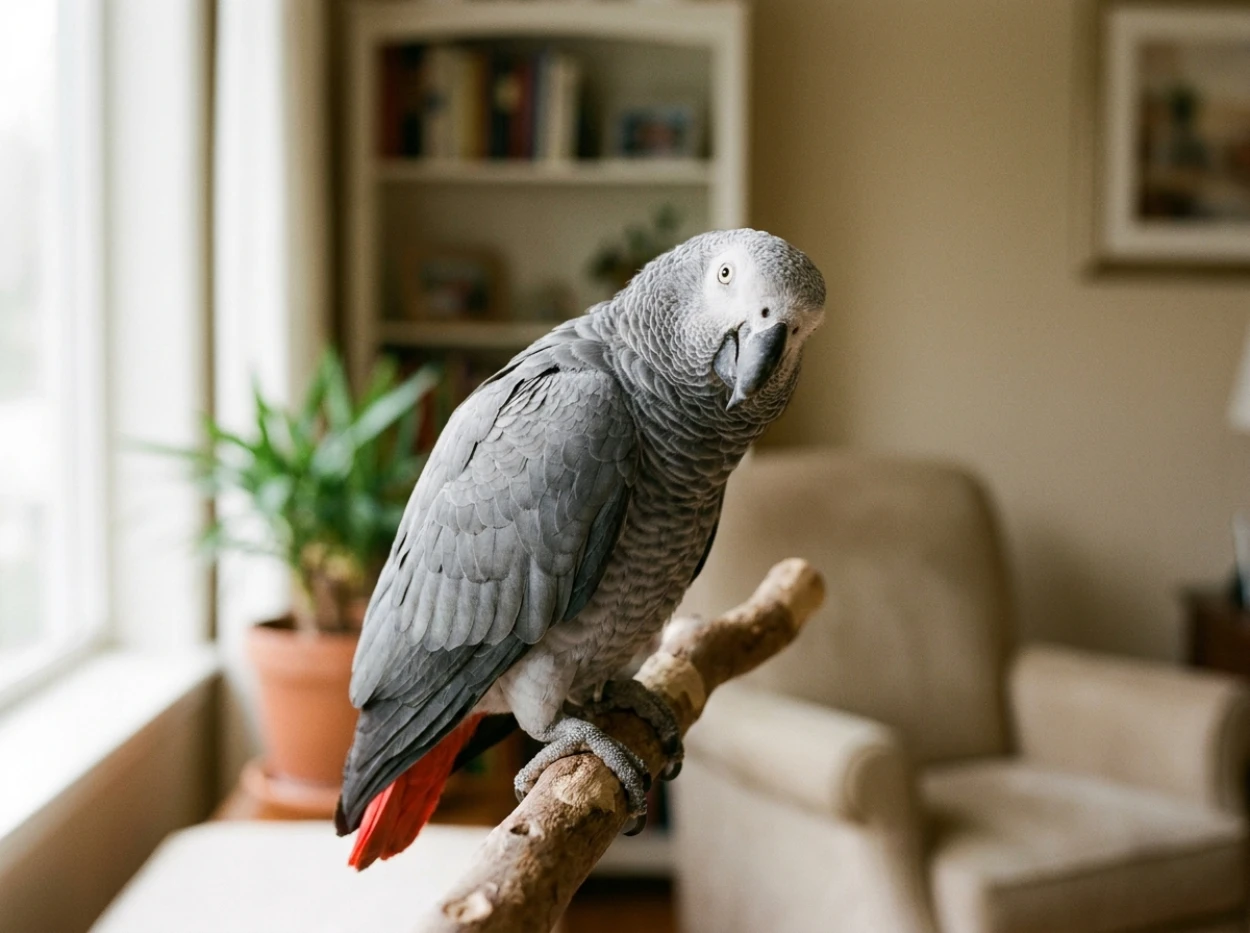
That intelligence is exactly why parrots make such compelling comedic "actors" online. A dog reacts. A cat ignores. A parrot responds — and often on a delay, with what looks suspiciously like comedic timing. When a bird pauses, tilts its head, and then delivers a perfectly placed squawk or phrase, it's not scripted luck. It's a highly social, highly observant animal reading the room — literally.
Meet the Cast: The Species Behind the Memes
Every viral parrot clip tends to feature a handful of recurring "characters," and each one earned its reputation honestly.
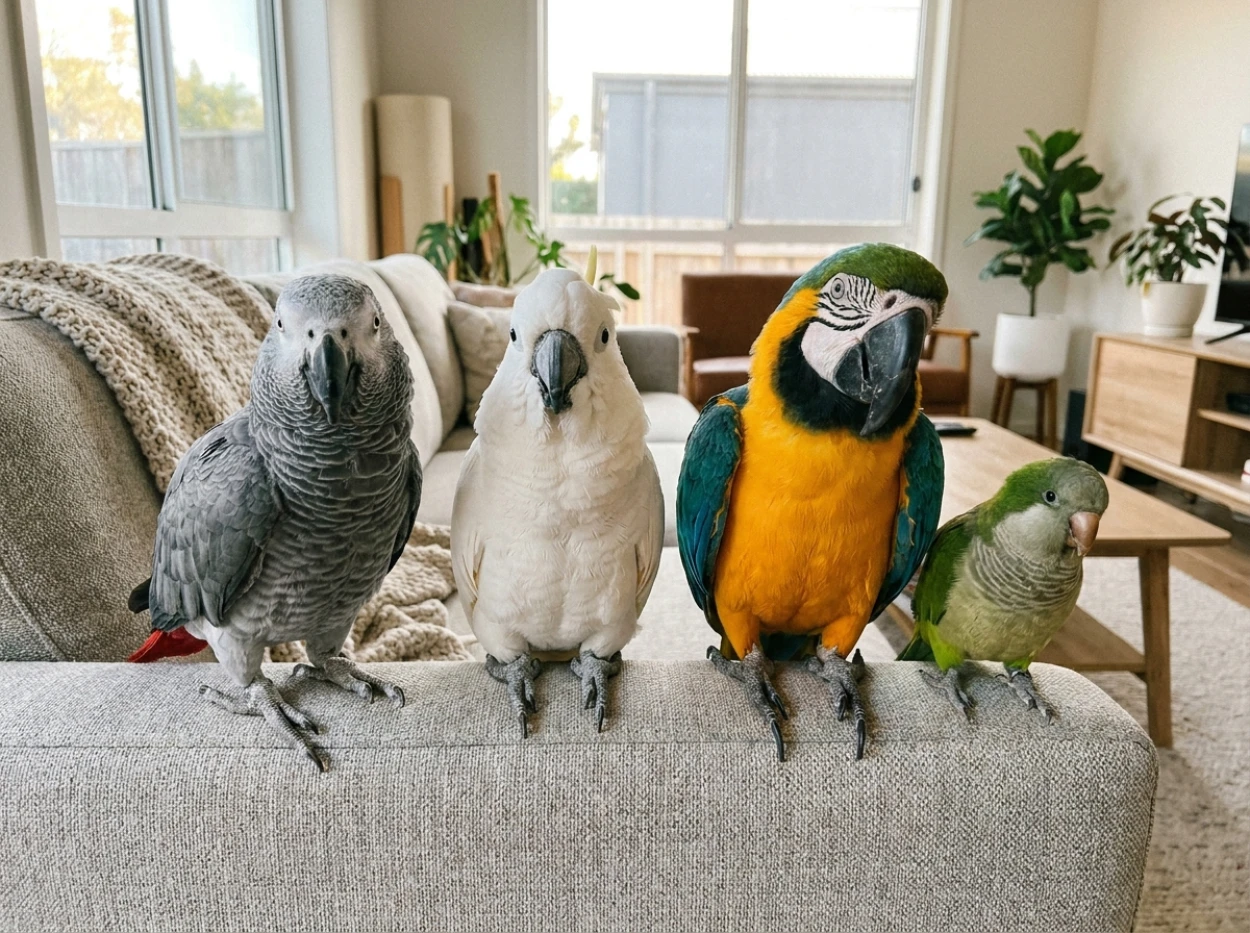
The African Grey Parrot is the internet's resident genius. Native to the rainforests of West and Central Africa, African Greys are widely considered the most cognitively advanced parrot species. The famous research bird Alex, studied for over 30 years at Brandeis University, could identify colors, shapes, materials, and quantities, and used language functionally — not just repeated it. When you see a Grey in a video "understanding" a joke or reacting on cue, that's not far-fetched. These birds process far more than they're given credit for.
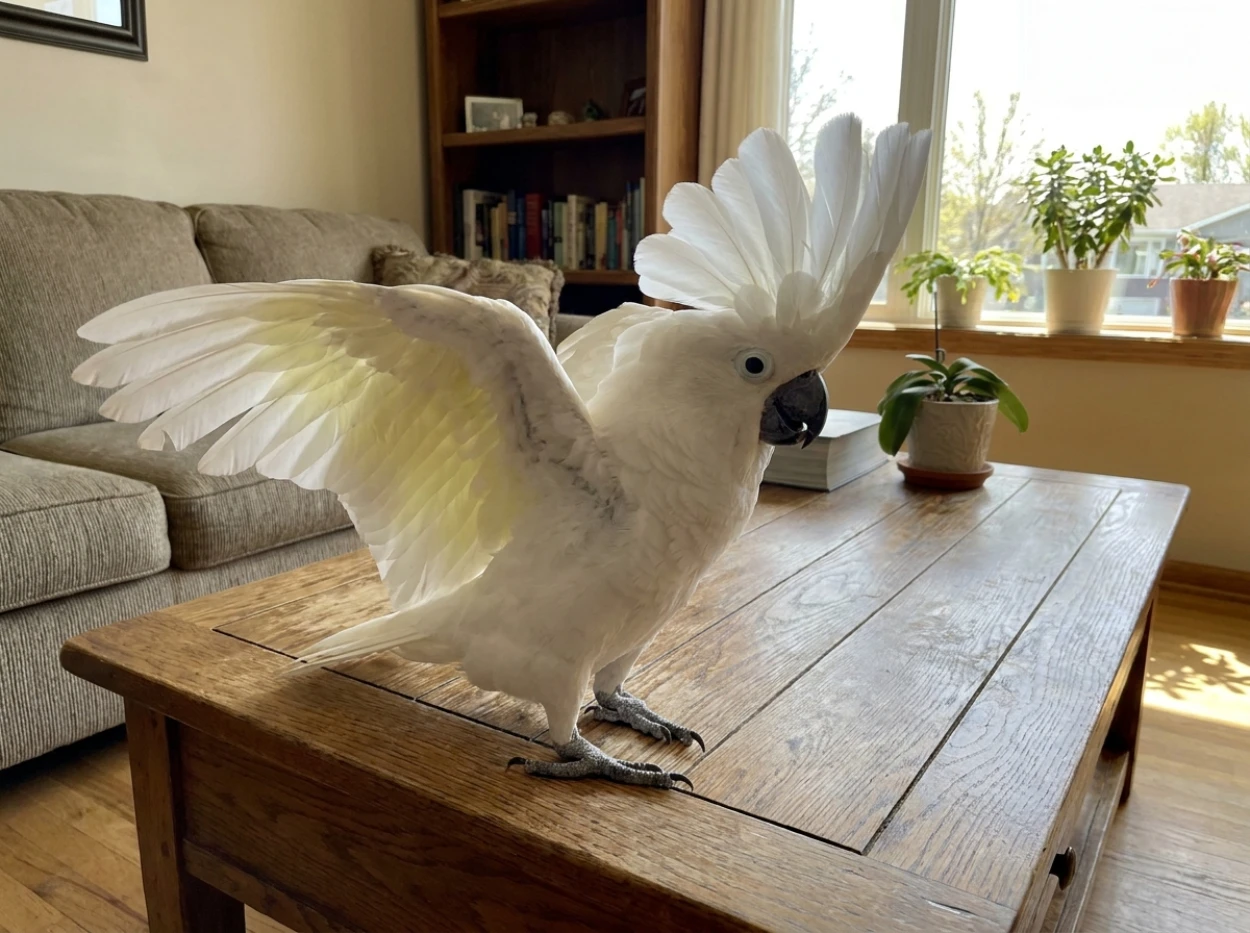
The Umbrella Cockatoo brings the drama. With its striking white feathers and a crest that snaps open like an umbrella when the bird is excited, startled, or just showing off, this species is built for big, expressive reactions — which is exactly why cockatoos dominate "reaction video" content. They're also famously affectionate and can become deeply bonded to their owners, sometimes to the point of separation anxiety if left alone too long — a real welfare consideration behind the cute clips.
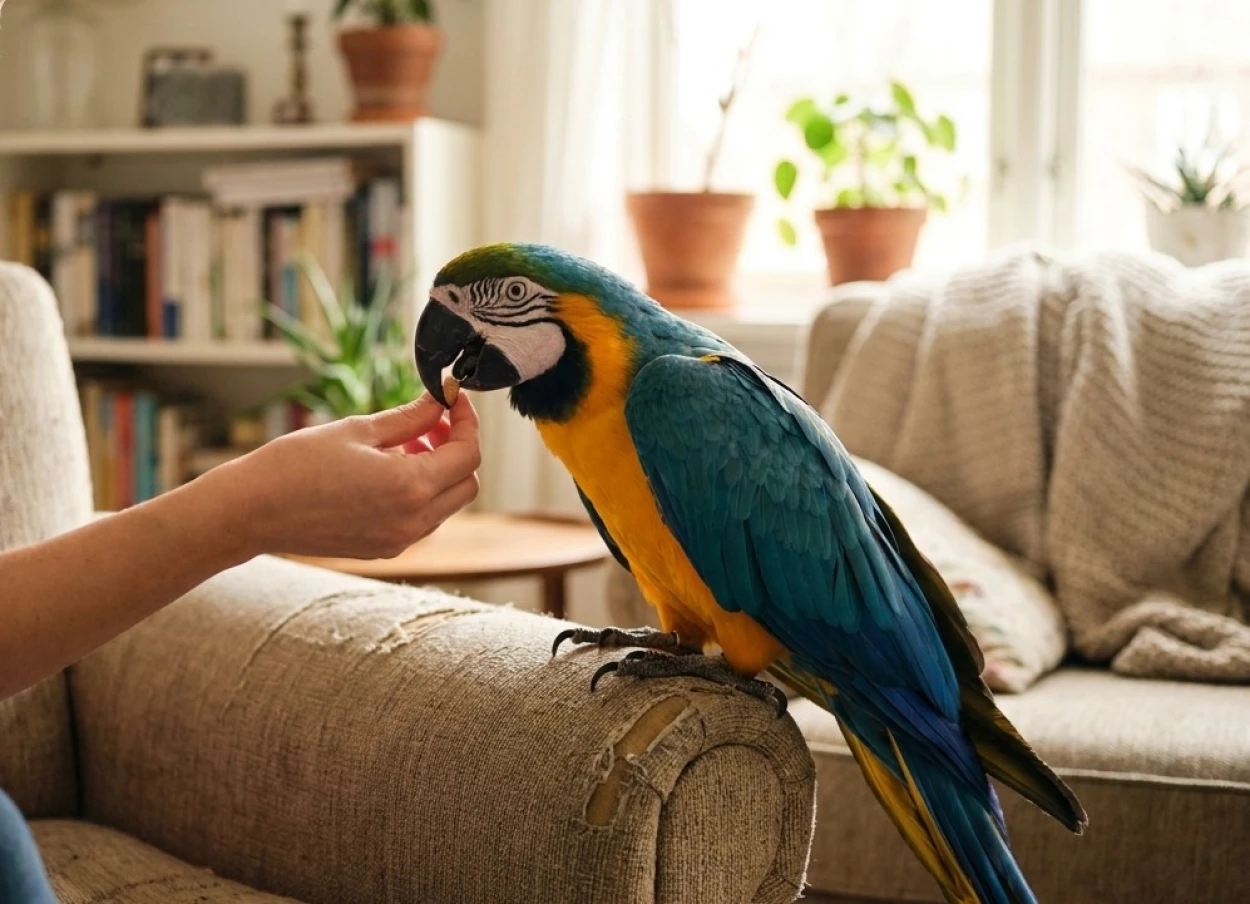
The Blue-and-Gold Macaw is the showstopper. One of the largest parrot species kept as pets, macaws are loud, vividly colored, and have wingspans that can stretch over three feet. In the wild, they live in tight-knit flocks and communicate constantly — which explains why captive macaws crave near-constant social interaction and get chatty (or theatrical) the moment they have an audience.
The Sun Conure is pure chaotic energy in a small package. Bright orange, yellow, and green, Sun Conures are known for being fearless, loud, and endlessly playful — the kind of bird that will absolutely out-dance everyone in the room the second music starts.
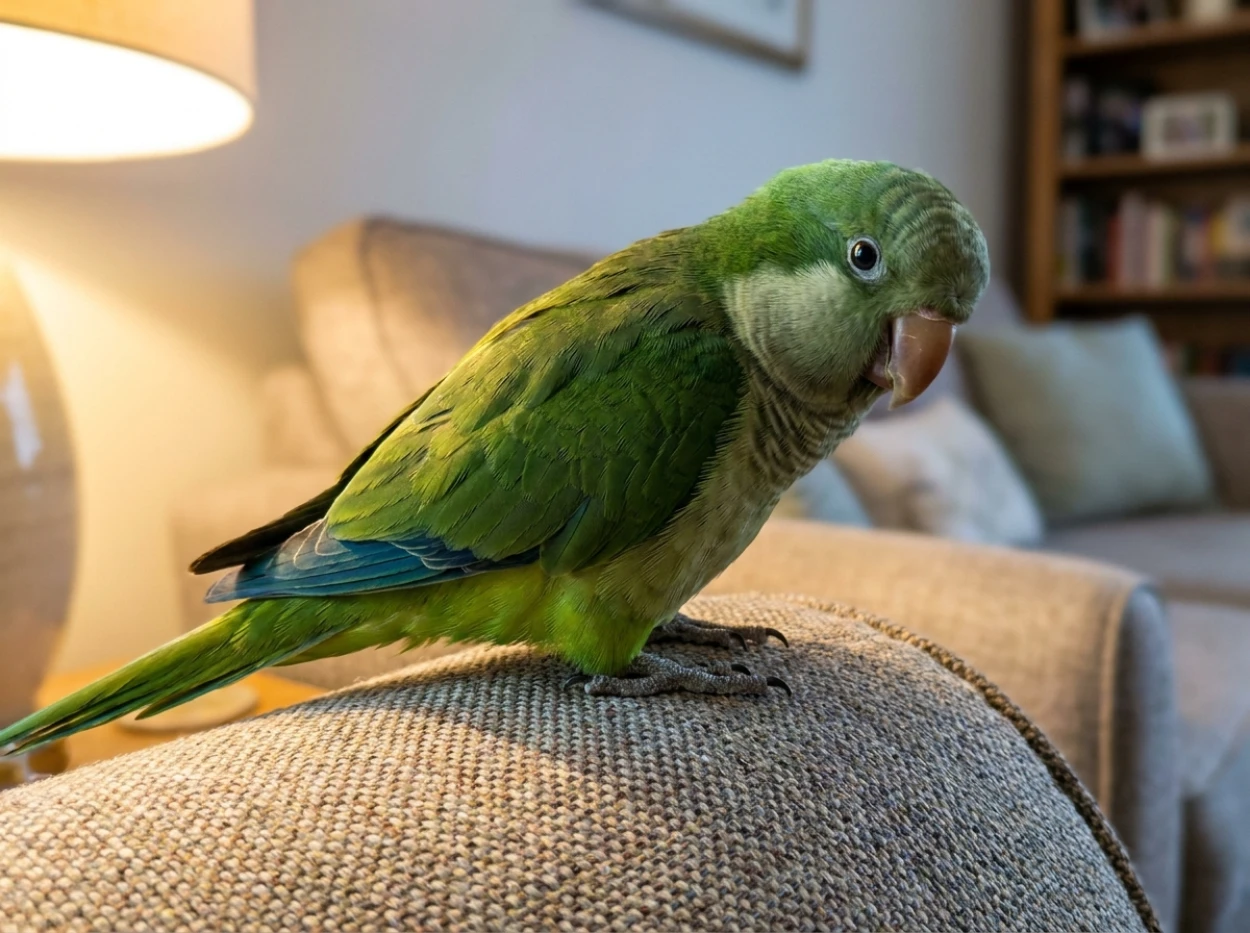
The Quaker Parrot (also called the Monk Parakeet) is the underdog scene-stealer. Small, green, and often underestimated, Quakers are actually one of the few parrot species that build elaborate communal stick nests in the wild — a level of architectural teamwork most parrots don't bother with. They're clever, sneaky, and have big personalities packed into a small body, which is exactly why the "late reaction" bird in so many viral clips tends to be a Quaker. Nobody expects the small one to have the best comedic timing — and that's precisely why it works.
Why Parrots "Play Dead": The Science Behind the Drama
Videos where a parrot dramatically flops over at a sound or cue tap into something real: parrots are exceptional at learning associations between specific triggers and specific behaviors, especially when the behavior gets rewarded with attention, treats, or an excited human reaction.
This is straightforward operant conditioning — the same principle behind teaching a dog to sit. A bird that flops onto its side after a certain word or sound has almost always learned that the "performance" reliably earns a treat, a laugh, or a cuddle afterward. Parrots are food-motivated and highly social, so they pick up on cause-and-effect patterns fast, especially when there's a consistent human cue involved.
What makes it look so convincing is the parrot's physical vocabulary. In the wild, a bird lying still with relaxed wings can signal submission, trust, or even mimicry of resting behavior seen in flockmates. Trained "faint" tricks borrow from movements that are already natural to the bird — which is why they look so eerily realistic on camera.
Why Parrots Dance (And Yes, It's Real Science)
The dancing-to-music clips aren't just adorable coincidence — they're backed by actual research. Scientists studying a Sulphur-crested Cockatoo named Snowball found that he could synchronize his movements to a musical beat and adjust his tempo when the music sped up or slowed down. That study, published by researchers including Aniruddh Patel, helped establish that beat synchronization isn't uniquely human — it appears in vocal-learning species, parrots included.
The theory is that the same brain wiring that lets parrots mimic complex sounds also wires them for rhythm. Vocal learning and movement synchronization seem to be linked, which is why parrots — alongside a short list of animals like elephants and some marine mammals — are some of the only non-human species that reliably bob, bounce, and step to a beat instead of just reacting randomly to noise.
The "Talking to Alexa" Trend: Fact, Not Fiction
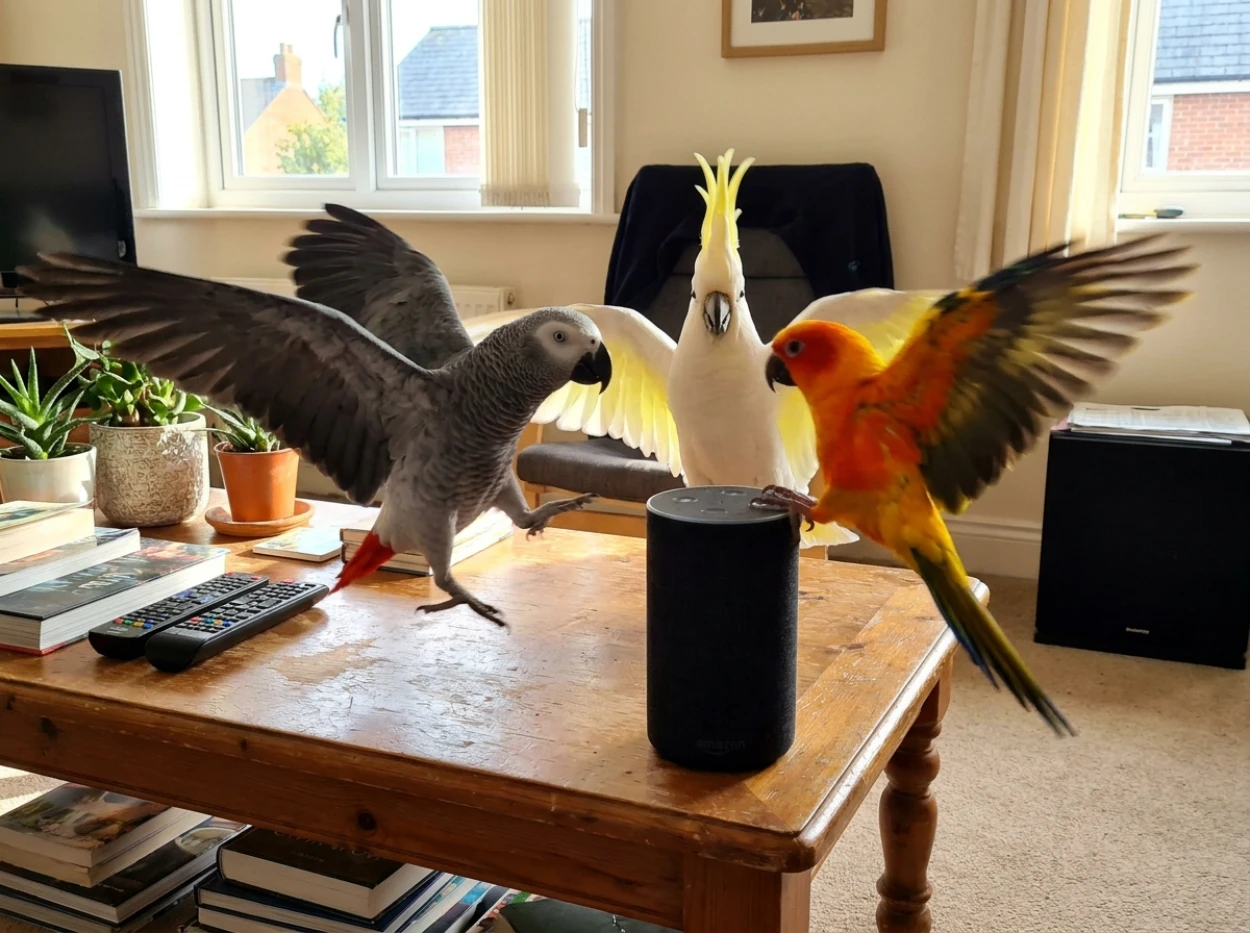
It might sound like a script, but real parrots really do interact with smart speakers — sometimes on purpose, sometimes by hilarious accident. There are documented cases of African Greys and other talking parrots triggering voice assistants simply by mimicking the wake word, then reacting with excitement (or alarm) when music or a response follows. Because Greys and other mimicking species pick up phrases from repetition in the household, "Alexa" is often one of the very first words they learn — right alongside their owner's name.
The Language Behind the Laughs
Part of what makes parrot content so shareable is that these birds don't just make noise — they use language in ways that feel startlingly close to conversation. This is where parrots pull ahead of almost every other pet.
Most animal "talking" videos rely on human interpretation — we decide a dog's bark means "I'm hungry" or a cat's meow means "pet me now." Parrots are different because the words are actually ours, borrowed and redeployed in context. A Grey Parrot that says "no special feed today" isn't randomly stringing syllables together; it has almost certainly heard that phrase, or a version of it, tied to specific situations enough times to reuse it appropriately. Researchers call this contextual mimicry, and it's a meaningfully different skill from simple sound repetition, like a recording playing back.
This is also why parrot "comebacks" land so well online. When a bird pauses, appears to process what just happened, and then responds with a phrase that fits the moment, viewers aren't just watching a trained trick — they're watching something that looks a lot like wit. Whether or not the bird "understands" the joke the way a human would is still debated among researchers, but the behavior is consistent enough, across enough species, that it's clearly more than coincidence.
Vocabulary size backs this up. Well-socialized African Greys have been documented using well over 100 words functionally, and some individual birds — like Alex, the research subject mentioned earlier — used language to make requests, refuse things, and even express something close to boredom during repetitive tasks. That's not showbiz. That's a genuinely complex communicator, and it's a big part of why audiences can't look away.
What Makes a Parrot Video Actually Go Viral
Not every cute animal clip takes off, and parrot content has a specific formula that tends to outperform other pet niches. A few patterns show up again and again in the highest-performing clips:
- The unexpected delay. A reaction that comes a beat later than expected — like a bird pausing before it "gets" the joke — creates suspense in a ten-second clip, which is rare and valuable in short-form video.
- A clear "character" per bird. Viewers latch onto personality faster than species facts. The dramatic cockatoo, the sassy small parrot, the chill macaw — giving each bird a distinct role makes multi-pet videos easier to follow and rewatch.
- Genuine owner reaction. Real, audible laughter from the person filming does more for shareability than almost any edit. It signals authenticity, which algorithms and audiences both reward.
- A satisfying "reset" at the end. Whether it's all four birds frozen mid-dance or lying dramatically "knocked out" together, a clean final beat gives viewers a natural stopping point that encourages replays and shares.
Understanding this formula matters beyond entertainment value — it's also a useful lens for anyone building a pet-content brand or community, because the same instincts that make a ten-second clip work are what make a longer article, a photo series, or a whole platform around pet stories worth returning to.
The Line Between Funny and Fair: A Quick Welfare Note
Here's something worth saying plainly, especially for anyone inspired to recreate these moments at home: parrots startle easily, and sudden loud noises or surprises can cause real stress, not just a funny reaction. The most viral, most rewatched parrot videos almost always feature birds that are clearly comfortable, well-bonded with their owner, and reacting to familiar cues — not birds being genuinely frightened for a laugh.
If you're filming your own bird, the golden rule is simple: it should look fun to the parrot, not just to the camera. A relaxed body, curious head tilts, and a bird that leans in rather than away are good signs. If your bird is flattening its feathers, hissing, or trying to retreat, that's not comedy — that's stress, and it's worth backing off.
Bringing the Funny Home: Tips for Bonding With Your Own Parrot
You don't need a viral-worthy setup to build the kind of relationship these internet-famous parrots have with their owners. A few things actually move the needle:
- Consistency over cleverness. Parrots learn through repetition. The same word, tone, or gesture used consistently will get picked up far faster than random one-off attempts.
- Reward the behavior you want, immediately. Timing matters more than the treat itself — a reward given seconds too late teaches the wrong lesson.
- Talk to your bird like it's listening, because it is. Parrots pick up context, tone, and vocabulary far beyond simple mimicry, especially social species like African Greys and Quakers.
- Give them an audience. Parrots are flock animals. A bird that gets regular social interaction is far more likely to show off, "perform," and engage — not because it's trained to, but because it genuinely enjoys the attention.
- Respect the quiet moments too. For every dancing, joking, chatty clip online, that same bird spends plenty of time resting, preening, or wanting to simply sit near its person. That balance is part of what keeps a parrot happy long-term.
Why We Can't Stop Watching
At the core of every viral parrot video is something surprisingly relatable: a creature that's smart enough to understand what's happening, expressive enough to react in a way we recognize, and social enough to want to be part of the joke. That combination — intelligence, expressiveness, and genuine connection to the people around them — is rare in the animal kingdom, and it's exactly why parrots keep winning the internet, one dramatic flop or perfectly timed "OH YEAH!" at a time.
Got a bird with main-character energy of its own? Or a dog who's survived a surprise parrot encounter? Head over to Petlur's Funny & Crazy Moments community to share your pet's best (or most chaotic) moments with people who'll actually appreciate them.